Thursday, September 25, 2025

Consecuencias positivas y negativas de la ocupación norteamericana en Rep. Dominicana en 1916 (Visión general creada por IA)


La ocupación estadounidense de 1916 a 1924 tuvo consecuencias positivas, como la creación de infraestructura y la organización del Estado, pero también negativas, que incluyen la pérdida de soberanía, el desarme de la población, la explotación económica y el aumento de la deuda pública. Los intereses económicos de EE. UU. prevalecieron sobre las necesidades del país, lo que generó resistencia y descontento entre la población dominicana. 
Consecuencias Positivas
  • Creación de infraestructura: 
    Se construyeron carreteras, se organizaron los servicios de aduanas y se establecieron sistemas de telecomunicaciones. 
  • Modernización del Estado: 
    Se organizó la administración pública y la estructura del Estado, con la creación de la Secretaría de Salud Pública y la unificación de la Fuerza Pública bajo el control de EE. UU. 
  • Mejora en salud pública: 
    Se crearon medidas de prevención y atención de enfermedades, mejorando la salud de la población. 
Consecuencias Negativas
  • Pérdida de soberanía: 
    La República Dominicana perdió su autonomía política, ya que los marines estadounidenses asumieron el control del gobierno y la administración del país. 
  • Desarme de la población: 
    La prohibición del porte de armas buscaba controlar la población y los focos de resistencia. 
  • Explotación económica y deuda pública: 
    Se beneficiaron empresas norteamericanas, especialmente en la industria azucarera, y se incrementó la deuda pública dominicana. 
  • Censura y represión: 
    Se controló la prensa para evitar la difusión de críticas a la ocupación y se reprimió cualquier manifestación de oposición. 
  • Resistencia patriótica: 
    La intervención provocó un fuerte sentimiento nacionalista y resistencia pacífica y armada por parte de la población y los intelectuales dominicanos. 


Friday, March 26, 2021

WOMEN WHO CHANGED THE WORLD: Octavia E. Butler


"Octavia Estelle Butler was inspired to write science fiction after watching a schlocky B-movie, Devil Girl from Mars. She was twelve years old and thought: “Geez, I can write a better story than that.”

Her mother did domestic work, an experience that would shape Butler’s writing. “I was around sometimes when people talked about [my mother] as if she were not there, and I got to watch her going in back doors and generally being treated in a way that made me… I spent a lot of my childhood being ashamed of what she did,” Butler remembered in a 1991 interview with the journal Callaloo. She would later attempt to resolve these feelings in her most popular novel, Kindred.

Despite her dyslexia, the young Butler read voraciously. “I read a lot of science fiction with absolutely no discrimination when I was growing up—I mean, good, bad, or awful [laughs]. It didn’t matter,” she said in a 1996 interview published in Science Fiction Studies. She devoured everything from Theodore Sturgeon to Robert A. Heinlein to Ray Bradbury.

She began trying to sell her science fiction writing when she was thirteen. “I didn’t know what good writing was frankly, and I didn’t have any particular talent for writing so I copied a lot of the old pulp writers in the way I told a story,” Butler told Callaloo. “Gradually I learned that that wasn’t the way I wanted to write.”

Of course, the world of science fiction was (and still is) dominated by white, male authors. Instead, “Butler approached [science fiction] askance, choosing to write self-consciously as an African American woman marked by a particular history,” write literary scholars De Witt Douglas Kilgore and Ranu Samantrai.

In 1969, she was discovered by well-known science fiction writer Harlan Ellison at a screenwriting workshop in Los Angeles. “Harlan [wrote] that she wasn’t a very good screenwriter, which doesn’t surprise me much,” recalled friend and fellow sci-fi writer Vonda McIntyre. “Her subjects and ideas and expressions were deep and complex. Screenplays have strengths, but ‘deep’ and ‘complex’ aren’t high on that list.” Nevertheless, Ellison recommended Butler for the Clarion Science Fiction Writers Workshop.

After leaving the workshop, Butler sold two short stories (one to Ellison). “I thought I was off, I thought I was a writer,” said Butler in a 2003 interview. “I didn’t sell another word for five years.”

She held menial day jobs “to keep her head above water,” writes McIntyre. “Then she would get up early in the morning—two or three o’clock—and write before going to work.”

Then, in 1976, Butler finally sold her first novel, Patternmaster. She spent the next few decades growing her audience, which was split between science fiction devotees, Black fans, and feminists. Her books grew more and more successful, especially after she became the first science fiction writer to receive the MacArthur “Genius Grant” in 1995.

Though she passed away in 2006, Butler continues to inspire writers and scientists today. NASA recently paid tribute to her influence by naming the Mars rover’s touchdown site Octavia E. Butler Landing. After decades of writing and teaching, Butler’s work has now become “an essential part of what we mean when we speak of science fiction,” write Kilgore and Samantrai. “That is a measure of immortality"."

https://daily.jstor.org/how-octavia-e-butler-became-a-legend/?utm_campaign=generalmarketing&utm_content=twitter&utm_medium=social&utm_source=twitter

https://daily.jstor.org/when-science-fiction-becomes-real-octavia-e-butlers-legacy/

Thursday, March 18, 2021

WOMEN WHO CHANGED THE WORLD: SHARON PEACOCK


"Sharon Peacock, one of the world’s top scientific warriors in the battle with the 0.0001-millimetre virus that causes COVID-19, had to fight a much more personal battle inside Britain’s education system to rise to the top.

Peacock, 61, is a globally recognised virus hunter: COVID-19 Genomics UK (COG-UK), which she set up a year ago as the pandemic swept towards Britain, has sequenced nearly half of all the novel coronavirus genomes so far mapped around the world.

Her life story is a song to meritocracy and an illustration of how the quiet kindness of strangers can change the fate of a young life.

But it is also a tale of how the British educational system almost overlooked the talents of a young woman who would become a distinguished Cambridge professor of microbiology and put her country at the leading edge of sequencing a virus that has sown personal and economic devastation across the planet."

https://www.reuters.com/article/us-health-coronavirus-britain-peacock-ne-idUSKBN2BA25Q?taid=6053bf5aa8e0d30001b4bf3f&utm_campaign=trueanthem&utm_medium=trueanthem&utm_source=twitter

Monday, March 15, 2021

WOMEN WHO CHANGED THE WORLD: MARY RITTER BEARD


"“Women have been a force in making all the history that has ever been made,” wrote Mary Ritter Beard in 1931, over half a century before the first presidential proclamation of Women’s History Week (as it was first called). Beard called not just for including women in history, but for expanding the very idea of history itself: “the narrative of history must be reopened, must be widened to take in the whole course of civilization.” As scholar Margaret Smith Crocco shows, Mary Beard fought hard for that expansion.

“Mary Beard introduced previously ignored factors of the past by reconfiguring labor history, political history, and cultural history through reexamining women’s role as civilization builders from ancient through modern times,” Crocco argues.

Mary Ritter, born in 1876, married Charles Austin Beard in 1900. They became a powerhouse Progressive Era couple. He was one of the most famous American historians of the first half of the century, revolutionizing the interpretation of the American Revolution. She was a suffragist, a historian in her own right, and a pioneering archivist instrumental in gathering the records of women’s history.

The Beards’ jointly authored books included textbooks and Book-of-the-Month Club selections, widely read beyond academic circles. They collaborated on “colossal” multivolume works, working together without a telephone in their home in Connecticut and then, in winter, out of hotels in Washington, D.C., so as to have access to the Library of Congress. Despite Charles Beard’s “emphatic insistence on the shared nature of their scholarship,” these books were often attributed solely to him. Crocco notes that Charles would also demand that the publisher not use blurbs from reviewers who refused to recognize the fact of dual authorship.

In addition to her collaborations with Charles, Mary Beard’s own major works—Women’s Work in Municipalities (1915), America through Women’s Eyes (1933), and Women as Force in History: A Study of Traditions and Realities (1946)—were foundational for the next generation of women historians. Gerda Lerner, “viewed by many as matriarch to the women’s historians emerging in the seventies,” said of Women as Force, “I was struck, as by a sudden illumination, by the simplicity and truth of her insight.”

Mary Beard was “marginalized both figuratively and literally as a woman who chose to work outside the institutions that would have given her efforts authority and legitimacy,” Crocco writes, adding in conclusion that Beard’s “call for a truly liberatory feminism and emancipatory forms of education for both men and women continues to define the boundaries of the culture’s imagination.”

https://daily.jstor.org/mary-beard-and-the-beginning-of-womens-history/?utm_campaign=generalmarketing&utm_content=twitter&utm_medium=social&utm_source=twitter


Sunday, March 7, 2021

WOMEN WHO CHANGED THE WORLD: GREAT WOMEN PAINTERS ALMOST NEVER INVITED TO EXHIBIT


"Even for an artist like Berthe Morisot, who had family support and would achieve great success with her work, dedicating her life to painting was a huge sacrifice: deviating from the prescribed role as wife and mother would cost her dearly in her personal life .

Even her fellow painters looked at her with disdain: Morisot was banned from the impressionist gatherings at the Café Guerbois and the Café de Batignolles.

There were two exceptions who did appreciate her effort to express the feminine vision through Art and her talent in capturing an atmosphere of light and delicacy, and transferring it to canvas:

The first was Edgar Degas, who as co-founder of the Impressionist Exhibitions invited her to exhibit from the first edition, in 1874!, And was key in the dissemination and success of her work.

The second was Claude Monet, who corresponded with her and treated her as equals, colleague to colleague."    (Free translation)


https://galeriasdeartebarcelona.com/mujeres-pintoras/?fbclid=IwAR1FVaHopCkdaa36OsAZnC87FHbp9AMpy4WSdLVqoiv4DXBvb3JsLlyiXrs


Friday, March 5, 2021

WOMEN WHO CHANGED THE WORLD: MEDICINE STUDENTS ON XIXth CENTURY


An Indian woman, a Japanese woman and a Syrian woman. All training to be doctors at Women’s Medical College of Philadelphia. 1885.


Tuesday, February 23, 2021

WOMEN WHO CHANGED THE WORLD: AFROAMERICAN HISTORIAN WOMEN


" Black History Month is packed with reflections of figures from the past whose names have sometimes been long buried or ignored. But what about the historians who unearthed and preserved their stories to begin with? Many of them were women, writes Pero Gaglo Dagbovie—and they made critically important contributions to the field of history itself.

Dagbovie explores the work of Black women historians between 1890 and the mid-1950s. It was a time of dramatic change for Black Americans, who pushed forward into the academy and the professions despite social and financial barriers. Men saw opportunities before women, who were socialized to seek professional roles defined as feminine while they also faced the roadblock of racism. As a result, many Black women historians were unable to break into academia.

That doesn’t mean they didn’t find ways to hone their education and expertise. From self-taught historians to Progressive-era novelists to those who at last did receive professional training and doctorates, Dagbovie characterizes history’s Black women as dynamic and driven."

https://daily.jstor.org/black-women-have-written-history-for-over-a-century/?utm_campaign=generalmarketing&utm_content=twitter&utm_medium=social&utm_source


First known symphony ever composed by a British woman – Alice Mary Smith’s Symphony in C minor.


Alice Mary Smith´s Symphony in C minor


https://www.classicfm.com/discover-music/alice-mary-smith-first-known-british-woman-compose-symphony/

Tuesday, February 9, 2021

WOMEN WHO CHANGED THE WORLD: ROSA LUXEMBURG (1871-1919)


"In this work, (The accumulation of capital,1913) Luxemburg sought to investigate the systemic conditions which made capitalist accumulation possible in the first place. Goods obviously had to be sold, to accumulate the profit that capitalists would reinvest to perpetuate the system. But, given the claims by Marx that capitalist production necessarily outstrips demand, she noticed that no incentive existed for capitalists to reinvest. Without reinvestment the system would collapse, so that an outlet for the profitable disposition of excess goods had to exist. That outlet she saw in terms of exports to pre- capitalist territories: in short, imperialism.

Imperialism is subsequently neither a mere aberration of an otherwise healthy system, as reformers wished to believe, nor “the highest stage of capitalism” (Lenin). Luxemburg saw it as intrinsically connected with capitalism from the beginning. And yet, since the flow of capitalist goods into pre-capitalist areas would eventually transform them into industrial ones, it was also obvious to her that capitalism must create its own historical limit beyond which looms the spectre of “breakdown.” As for the interim, it will become marked by increasingly ferocious competition between advanced states for those steadily diminishing pre-capitalist territories. Militarism and nationalism will therefore grow in conjunction with the imperialism that capitalism engenders."

https://jwa.org/encyclopedia/article/luxemburg-rosa


Sunday, February 7, 2021

WOMEN WHO CHANGED THE WORLD: ANNIE MONTAGUE ALEXANDER, PALEONTOLOGIST (1867-1950)


"In 1900, Annie Montague Alexander started attending paleontology lectures at the University of California at Berkeley. These talks changed her life. She fell in love with paleontology and didn’t miss a lecture for more than a year straight. Despite her keen interest in science, Alexander thought she wasn’t cut out for the minutiae of research. “Plagued by migraines and problems with her eyes, [Alexander] realized at a relatively young age that she would never be able to do any sort of close, detailed work,” writes Alexander’s biographer, biologist Barbara R. Stein. “Instead her financial competence, her influential nature, and her skill with a shotgun would all play pivotal roles in her life.”"

https://daily.jstor.org/annie-m-alexander-paleontologist-and-silent-benefactor/?utm_campaign=generalmarketing&utm_content=twitter&utm_medium=social&utm_source=twitter

Tuesday, June 30, 2020

Acerca de Nicolás Copérnico


" El asombro llevó a Copérnico a observar, inves­tigar, aprender y construir co­nocimiento, mientras afinaba una serie de competencias e informaciones que le permi­tieron presentar sus hallazgos de manera fundamentada y comprobable. Poco importa que todavía estuviera preso de un universo finito; que repitie­se con Aristóteles la ausencia de cambios en la llamada es­fera de la quinta esencia e in­ventase que los planetas se movían por rieles cristalinos; por la puerta que abrió Co­pérnico entraron Tycho Bra­he, Kepler, Galileo, Newton y todos los demás. Y sin embar­go, lo valioso no fue tanto lo que descubrió, sino la meto­dología empleada: no realizó silogismos a partir de autori­dades, sino que observó, ela­boró una hipótesis, la expresó y comprobó matemáticamen­te, la publicó y la sometió a la consideración de otros. "

https://listindiario.com/puntos-de-vista/2020/06/30/624064/asombrarse-para-investigar-y-aprender

Thursday, June 25, 2020

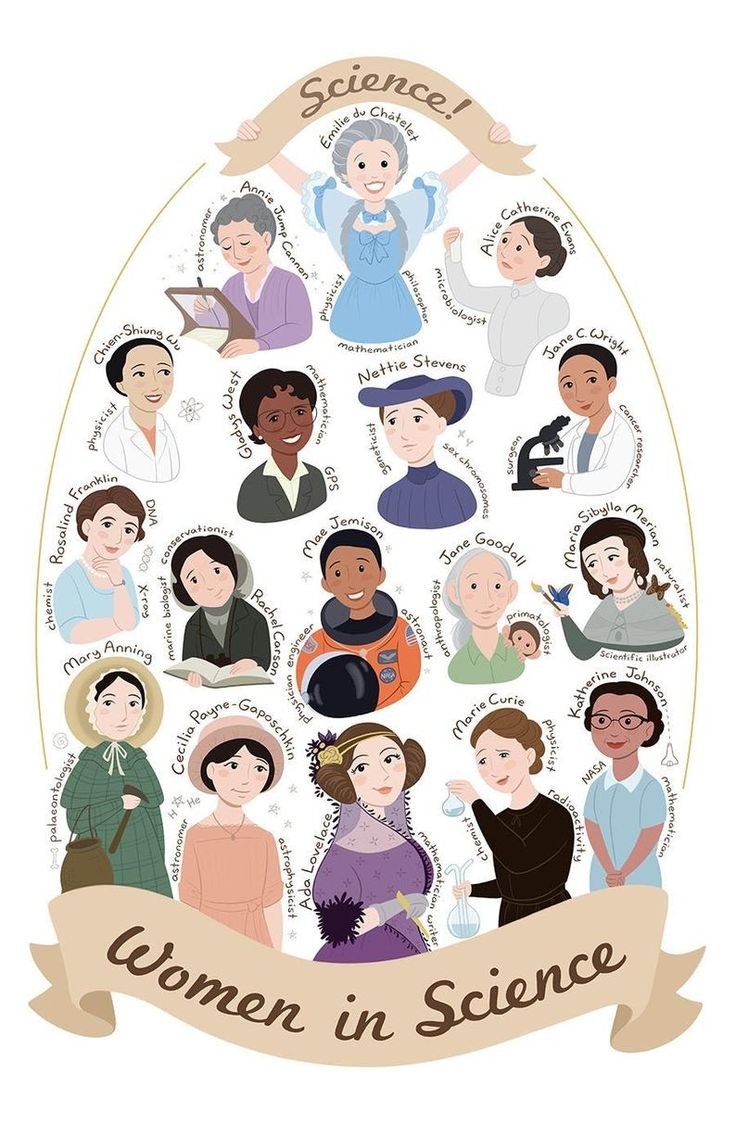
MUJERES QUE CAMBIARON EL MUNDO: MARIE CURIE


 Marie Curie es la única persona que ha ganado dos premios Nobel en dos categorías científicas diferentes:  uno en Física y el otro en Química.

"A la edad de 24 años, Marie Curie (entonces Marie Skłodowska) había emigrado desde Polonia, donde las mujeres no podían estudiar una carrera, y se matriculó en la universidad más famosa de Francia, la Sorbona. Devoraba una asignatura tras otra, apenas comía y vivía en una buhardilla sin calefacción. Fue la primera de su promoción y al acabar conoció a su marido, el físico Pierre Curie, que también fue su pareja científica. Marie descubrió que los rayos de Becquerel venían del interior de los átomos de uranio y que sólo otro elemento, el torio, emitía unos rayos parecidos. Entonces estudió los minerales de uranio y vio asombrada que uno de ellos, la pecblenda, era más radiactivo que si fuera uranio puro: su hipótesis fue que aquella roca contenía una cantidad mínima de algo desconocido y muy, muy radiactivo.

Pierre lo vio tan claro que abandonó sus propias investigaciones para centrarse en ayudar a Marie y, juntos, enseguida descubrieron dentro de la pecblenda dos nuevos elementos: el polonio y el radio, a cada cual más radiactivo. Para obtenerlos en cantidad y poder estudiarlos, invirtieron sus ahorros en toneladas de pecblenda y las guardaron en un cobertizo prestado y con goteras. Allí se iban, al terminar su jornada de profesores, a machacar y a deshacer con ácidos el mineral. Era un trabajo duro, en medio de gases tóxicos y productos radiactivos cada vez más puros. Cinco años después, las toneladas de mineral se habían quedado en 0,1 gramos de sal de radio, tan radiactiva que brillaba en la oscuridad y les producía quemaduras. Marie Curie ya podía presentar su tesis, que fue la más rentable de la Historia, pues le dio el título de doctora y además dos premios Nobel: el primero ese mismo año (1903), compartido con Becquerel y su marido; y el segundo fue en solitario (1911), pues Pierre había fallecido cinco años antes atropellado por un coche de caballos."

Tuesday, February 25, 2020

Women who changed the world: Katherine Johnson (1918-2020)


Katherine Johnson, NASA pioneer African-American mathematician, is dead at 101 years old.

Katherine Johnson worked at the Langley Research Center (West Virginia) from 1953 to 1986. Her calculations allowed the United States to conquer the Moon.

NASA paid tribute to the scientist: "She was a hero of America, a pioneer whose legacy will never be forgotten," wrote James Bridenstine, head of the US space agency.

The career of this great figure among black Americans inspired the film The Hidden Figures, released in 2016, adapted from the book by Margot Lee Shetterly, which recounted the all too often overlooked contribution of black women in the American conquest of the 'space.

The scientist had remained relatively unknown until President Barack Obama awarded her, in 2015, the Presidential Medal of Freedom, one of the highest civilian distinctions in the United States.

A graduate in mathematics, Katherine Johnson joined the American space program - the future NASA - in 1953, and had the primary task of controlling the work of her superiors using calculations.

At that time, racial segregation was still in effect in the United States, and the scientist was working as a "colored computer" with dozens of other black mathematicians, away from their white colleagues. It was not until 1958 that his team was integrated into other NASA divisions, to be part of the first manned space flight program in the United States.

During her three-decade career with the space agency, Katherine Johnson developed crucial equations that enabled the United States to send astronauts into orbit and to the Moon, formulas still used in contemporary aerospace science. In particular, she calculated the trajectories of Apollo-11, the historic mission that made Neil Armstrong the first man to walk on the Moon in 1969.

Free translation from:  https://www.lemonde.fr/sciences/article/2020/02/24/katherine-johnson-la-mathematicienne-pionniere-de-la-nasa-est-morte-a-l-age-de-101-ans_6030688_1650684.html?xtor=EPR-32280629-[a-la-une]-20200225-[zone_edito_1_titre_3]

Tuesday, May 28, 2019

Women who changed the world: Women Artists


"Focusing on fifty diverse women artists from Artemisia Gentileschi through Judy Chicago, Ana Mendieta, and the Guerrilla Girls to Barbara Kruger, Cindy Sherman, and Mona Hatoum, this book equips readers with an understanding of feminist art, as well as an appreciation of its most important figures. This latest addition to the Art Essentials series documents women artists in context to offer readers a rich understanding of key female artists from the Baroque to the present day."


https://www.thamesandhudsonusa.com/books/women-artists-softcover