Monday, June 27, 2011

Outstanding Scientific Women in last 100 years (4)

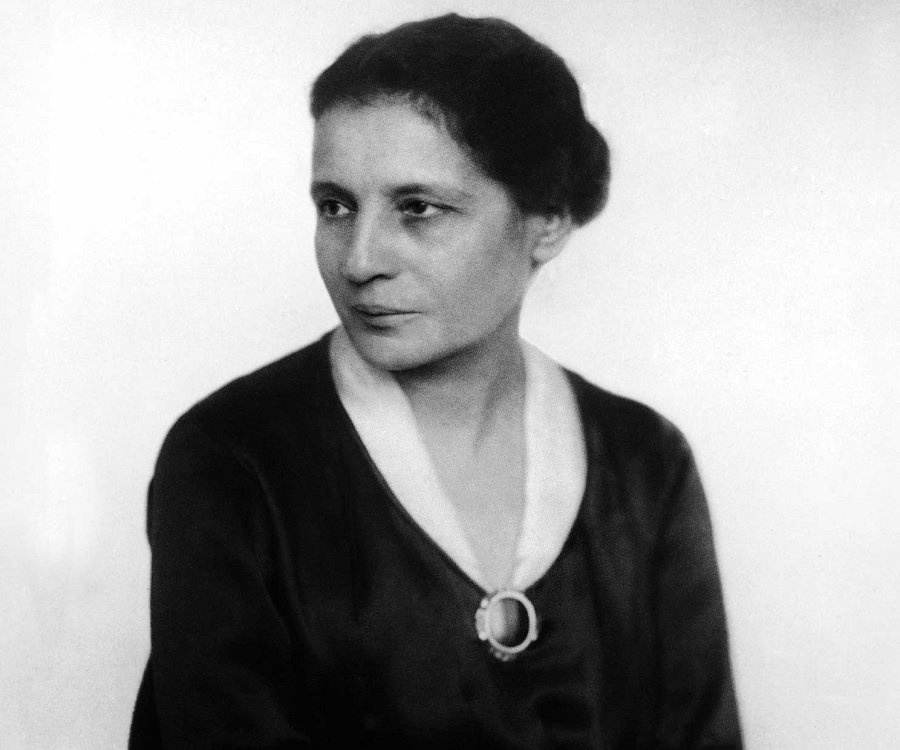
Dr. Lise Meitner was born to a jewish family in Vienna, Austria (1878) and died in Cambridge, England (1968); due to Austrian restrictions on female education, she only could enter the University of Vienna in 1901.  Ludwig Boltzman, who thought that physics is a battle for ultimate truth, was her teacher.

When the Nobel Prize in Chemistry was awarded to Otto Hahn in 1944 for the discovery of nuclear fission ("for his discovery of the fission of heavy nuclei") the Academy overlooked Lise Meitner, who worked with him in the discovery and gave the first theoretical explanation of the fission process.  They collaborated for 30 years at the Berlin`s Kaiser Wilhelm Institute for Chemistry, where each of them headed a section, she studied the physics and he the chemistry of racioactive substances. The proof of fission required both the physical insight of Meitner and her nephew physicist Otto Frisch, and the chemical findings of Hahn and Strassmann. In 1966, Hahn, Meitner and Strassmann were awarded the U.S. Fermi Prize

After the German annexation of Austria in 1938, she had to emigrate and went to Stockholm, where she continued working.  She later retired to Cambridge, England, where she died in 1968.  In 1997 was announced that element 109 would be named meitnerium (Mt) in her honor. Many consider her the most significant woman scientist of the XXth century.
Tuesday, May 24, 2011

The Cognitive Revolution

An important thinking shift on Psychology science happened during the 60`of XXth Century.  Many researchers became interested on what goes on in the mind; this was a change after Behaviorism emphasis on direct observation of behavior.  This new scope of mind thought that complex cognitive processes such as language and thinking could not receive satisfactory explanations in terms of the stimulus-response relations of the Behaviorism model, which led to the field known as Cognitive Psychology.

Cognitive researchers began with the study of learning and soon became established as the study of information processing associated with mental activities, such as attention, perception, memory, problem solving.  They did not return to the introspective methods used by Wundt on XIX Century, but designed another methods for testing their ideas about mental processes.  Experimental methods were adapted to study  internal processes, not directly observed.

Cognitive Psychology can be considered as part of the cognition sciences that include, too, linguistics and AI (Artificial Intelligence).  The brain receives information from the senses ( sight, hearing, etc.), and then this information is processed, similar to a computer.  It is studied the function of the mind (what it does) and the process (how it does it).

Eventually, in order to be able to help people in everyday life, the Cognitive approach started investigating on social cognition:  how those cognitive processes were used by the human beings to understand social situations.

Wednesday, May 18, 2011

Outstanding Scientific Women in last 100 years (3)

Barbara McClintock, American scientist (1902-1992), was born in Hartford, Connecticut; she was the youngest of three daughters in a middle-class family.  She enrolled at the School of Agriculture in Cornell University, where the tuition was free, graduated in 1923, and in 1927 received her PhD.

For the time being it was very difficult for women to get permanent work in universities and she survived on several short-term research fellowships at various universities.  In 1931, she was the first woman postdoctoral fellow to work at the California Institute of Technology (Caltech); it was necessary that the Board of Trustees
granted her special permission, even she was paying her own salary from her fellowship.

After several uninteresting positions, she resigned the last one in 1941; then she heard about a research institute at Cold Spring Harbor on Long Island, where as much as 60 geneticists were working.  After some years her position there was made permanent and was given the freedom to follow her own lines of research.

In 1945 she was the first woman to be elected president of the Genetics Society of America; in 1983, at 81 years old, she was awarded the Nobel Prize in Physiology or Medicine for her work on cytogenetics of maize:    seventh woman to receive it in science.


http://nobelprize.org/nobel_prizes/medicine/laureates/1983/presentation-speech.html

Thursday, May 5, 2011

Outstanding Scientific Women in last 100 years (2)

Rosalind Franklin, British Biophysicist (1920-1958), was trained as a physical chemist and microbiologist and made an important contribution to science: using X-ray crystallography, her work led to the discovery of the structure of DNA, that is, that this molecule consists of an intertwined double helix of atoms.  Her "Photo 51" gave colleagues Watson and Crick the needed evidence to confirm the double helix structure of atoms, which they published in Nature on April 1953, with little acknowledgement to Rosalind`s contribution, gaining a Nobel prize in Medicine in 1962.  This exclusion is considered an example of sexism in the scientific research world.

She was born in London in 1920, studied natural science at Newnham College, Cambridge, and died at 38 years old of ovarian cancer, probably due to high exposure to X-rays in her laboratory work.

https://profiles.nlm.nih.gov/spotlight/kr/feature/biographical
https://www.imdb.com/news/ni59000202

 Dorothy Crowfoot Hodgkin, British Chemist (1910-1994), studied chemistry at Somerville College, Oxford, where she obtained a first class degree in 1932, then did PhD at Cambridge.  Some years later she returned to Oxford, continued her work on the structure of insulin and published her findings in Nature in 1935.  She worked on the structure of penicilline and vitamine B12 and in 1964 was awarded the Nobel prize in Chemistry "for her determinations by X-ray techniques of the structures of important biochemical substances"

First woman to be awarded the Royal Society`s Order of Merit, highest honour; first woman to be appointed (1970) as Chancellor of the University of Bristol.

https://www.nobelprize.org/prizes/chemistry/1964/ceremony-speech/

Monday, May 2, 2011

Outstanding Scientific Women in last 100 years (1)

Françoise Barré-Sinoussi, (born July 30, 1947, Paris, France), French virologist who was a corecipient, with Luc Montagnier and Harald zur Hausen, of the 2008 Nobel Prize for Physiology or Medicine. She and Montagnier shared half the prize for their work in identifying the human immunodeficiency virus (HIV), the cause of acquired immunodeficiency syndrome (AIDS).

Barré-Sinoussi earned a Ph.D. (1975) at the Pasteur Institute in Garches, France, and did postdoctoral work in the United States at the National Cancer Institute in Bethesda, Maryland. In 1975 she joined the Pasteur Institute in Paris, and in 1996 she became head of the Retrovirus Biology Unit (later called Regulation of Retroviral Infections Unit) there. From 2012 to 2014 Barré-Sinoussi was president of the International AIDS Society.

When Montagnier led efforts at the Pasteur Institute in 1982 to determine a cause for AIDS, Barré-Sinoussi was a member of his team. Through dissection of an infected patient’s lymph node, they determined that AIDS was caused by a retrovirus, which came to be known as HIV. Their work led to the development of new antiviral drugs and diagnostic methods. (Data from Britannica)

http://nobelprize.org/nobel_prizes/medicine/laureates/2008/illpres.html#


Marie Curie, Polish-born French, Physicist and Chemist (1867-1934)  Marie Sklodowska is the only person to be awarded a Nobel prize in two different sciences:  in 1903 in Physics, jointly with her husband Pierre Curie and Henri Becquerel for their work on radioactivity; and in1911 in chemistry for isolating radium in the state of the pure salt, and characterizing it as a new element.

She discovered that thorium is radioactive and then demonstrated the existence of two new radioactive elements:  radium and polonium.

http://nobelprize.org/nobel_prizes/physics/articles/curie/
http://focus.tv5monde.com/femmesetsciences/2013/04/11/marie-curie-nee-sklodowska-1867-1934/
http://nobelprize.org/nobel_prizes/chemistry/laureates/1911/marie-curie-lecture.html

Tuesday, April 26, 2011

Wellness

The human being is a biopsychosocial system. The three components of this system work as an integrated whole.  Biologically, man adapts to survive like an individual and a member of the species. At the psychological level, he struggles to develop and to maintain self-esteem, a sense of identity and effectiveness, interpersonal relations. At the social level, he learns to tolerate the frustrations imposed by society and to accept delays in the gratificaciòn of his desires and needs. And he must do all this simultaneously.

There are dinamic relations of interaction among the three components of the system and, according to the contemporary notion that an optimum health state does not only consist of the absence of disease, but rather in a condition of reasonably pleasant biopsychosocial well-being, the set of experts to take care of the prevention and maintenance of this well-being should be of a multidisciplinary nature. Biologists, physicians, psychiatrists, psychologists, sociologists, epidemiologists, dieticians, are some of the professionals of the Health Sciences whose disciplines directly affect the good biopsychosocial adaptation of the human being.

That biopsychosocial well-being could be a good operational definition for that elusive feeling known as "happiness"

Thursday, April 7, 2011

Walden Two

Walden Two, only novel written by American Psychologist B.F. Skinner, Harvard University Professor for many years, got the title after the experience lived by the American Philosopher Henry David Thoreau during two years in a forest called Walden, in Massachusetts, alone and completely retired of social life, to live in contact with nature. On the other hand, Walden Two is a fictional community, separated from the rest of the world, where life is lived in agreement with ethical and psychological principles. In both cases exists a rejection of industrial civilization and its effects on humankind.

Frazier, the character who created the ideology of Walden Two in the novel, says to a friend: "The distance between the technical power of the man and the wisdom whereupon he uses it, it visibly increases year after year… To restrain science until the wisdom and the responsibility of the man are able to take the reins, is not solution. As threatning as it seems, as crazy as it appears to the contemplative soul, science must go ahead. But we must rise  the man to the same level. When we have developed a science of conduct as powerful as the atomic science, you`ll be able to see a considerable difference"

What makes me remember the words of Zenon, main character of the novel The Abyss by Marguerite
Yourcenar:  "The world is big … May it please to the One who perchance Is, to expand human heart to
life's full measure"