This exquisite article by Michelle Legro tells the story of the love and collaboration relationship between the French philosopher Voltaire and a French lady who was also a gifted mathematician, Emilie, Marquise du Chatelet.
Friday, February 14, 2014
Women in science: Emilie, Marquise du Chatelet
This exquisite article by Michelle Legro tells the story of the love and collaboration relationship between the French philosopher Voltaire and a French lady who was also a gifted mathematician, Emilie, Marquise du Chatelet.

Monday, August 26, 2013
Women in Science
This is a round-up of women working in scientific matters from the Smithsonian archives:
http://www.flickr.com/photos/smithsonian/sets/72157614810586267/
http://www.flickr.com/photos/smithsonian/sets/72157614810586267/
Monday, October 10, 2011
The punishment procedure and its undesirable consequences
Within the framework of the B.F. Skinner`s Operant Conditioning model, any unpleasant experience ranging from an unexpected cold shower to a beating, you name it, is considered punishment, stimulus that follow behavior and weaken the future probability of such behavior. Punishment involves presenting aversive stimuli (physical, verbal punishment) or withdrawing reinforcing stimuli (deprivation of privileges or isolation from people).
Punishment as a method to control behavior should be avoided due to its major side effect: people learn to avoid and escape from sources of punisment. But if it is necessary to use it to control a behavior too intense or too frequent, punishment must be used humanely. Otherwise is utterly immoral.
Escape is when people get away from a punishing stimulus: leave a room or a house, close a telephone call.
Avoidance is when people do not get close to a punishing stimulus: do not attend certain places or take some telephone calls, children do not want to go to school, adults get sick in order not to go to the job.
Much of the problem behavior both children and adults show, has come from punishment treatment by other people or from a hostile environment. Punishment causes frustration, and aggresiveness is quicker and most
common response to frustration.
Francisco Josè Arnàiz says about this topic: "Dollard and with him many authors define aggression as an instinctive reaction to any frustration. This explains at length the presence and virulence of the phenomenon of aggression and violence in modern society, supersaturated with frustrations. Personal, professional, political, social and economic frustrations:
Frustrations over the current unemployment and underemployment, the erratic behavior of public authorities,
the inequality of fundamental opportunities, the absence of clear rules of play, the competitiveness, the subterranean discriminations, the perversion of the judicial practice, the lack of defined criteria, the absence of ethical principles equally mandatory, the confusion of ideas, the success of rogues, the ridicule of the honest and clean, the precariousness of basic social services, the mismatch between labor compensation and the real cost of living, the emergence of criminal ways to get large sums of money, the triumplant injustice, the lack of understanding between parents and children, the prevailed lack of solidarity." (free translation)
It should not come as a suprise the amount of violence in the current social life utterly controlled by punishment procedures. Please read on this same blog the article Walden Two, an Utopian community imagined by B.F. Skinner, where punishment is never used.
http://listindiario.com/puntos-de-vista/2011/10/8/206416/Violencia-psicologica
http://www.workthesystem.com/pdfs/Skinner_(1986)_What_is_Wrong_with_Daily_Life.pdf
Punishment as a method to control behavior should be avoided due to its major side effect: people learn to avoid and escape from sources of punisment. But if it is necessary to use it to control a behavior too intense or too frequent, punishment must be used humanely. Otherwise is utterly immoral.
Escape is when people get away from a punishing stimulus: leave a room or a house, close a telephone call.
Avoidance is when people do not get close to a punishing stimulus: do not attend certain places or take some telephone calls, children do not want to go to school, adults get sick in order not to go to the job.
Much of the problem behavior both children and adults show, has come from punishment treatment by other people or from a hostile environment. Punishment causes frustration, and aggresiveness is quicker and most
common response to frustration.
Francisco Josè Arnàiz says about this topic: "Dollard and with him many authors define aggression as an instinctive reaction to any frustration. This explains at length the presence and virulence of the phenomenon of aggression and violence in modern society, supersaturated with frustrations. Personal, professional, political, social and economic frustrations:
Frustrations over the current unemployment and underemployment, the erratic behavior of public authorities,
the inequality of fundamental opportunities, the absence of clear rules of play, the competitiveness, the subterranean discriminations, the perversion of the judicial practice, the lack of defined criteria, the absence of ethical principles equally mandatory, the confusion of ideas, the success of rogues, the ridicule of the honest and clean, the precariousness of basic social services, the mismatch between labor compensation and the real cost of living, the emergence of criminal ways to get large sums of money, the triumplant injustice, the lack of understanding between parents and children, the prevailed lack of solidarity." (free translation)
It should not come as a suprise the amount of violence in the current social life utterly controlled by punishment procedures. Please read on this same blog the article Walden Two, an Utopian community imagined by B.F. Skinner, where punishment is never used.
http://listindiario.com/puntos-de-vista/2011/10/8/206416/Violencia-psicologica
http://www.psychologyandsociety.com/operantconditioning.html
http://duke.edu/~dandan/Papers/dishonesty.pdfhttp://www.workthesystem.com/pdfs/Skinner_(1986)_What_is_Wrong_with_Daily_Life.pdf
Monday, August 1, 2011
The influence of Biology on Psychology
I had stressed before the influence of Biology on Psychology, but not with the synthesis power R.S. Peters can do it; and since this is such an important stage in the history and development of Psychology as a science, I have a third excerpt invited:
"The influence of biology has proved to be the farther-reaching influence sustained by psychology, besides the philosophical, religious and medical traditions that had mainly conditioned its development. But that influence did not show with all intensity until the end of XIXth Century and the beginnings of the XXth one, when those who knew Darwinian biology began to study man in the same way they studied the animal, and using for the human conduct the same type of explanatory hypothesis. There was, however, a time of transition, before the different psychology schools of XXth Century appeared; during that time, the biologic approach did not have a radical influence on the old traditions of the psychology of "ideas" but, rather, corrected them. Psychology continue being essentially introspective. We must wait until the beginnings of XXth Century to see reflected in different "schools" the concrete result, for Psychology, of the Darwinian statement that men are, after all, animals, and that the same kind of problem can be considered with regard to men as with regard to animals." (p. 464)
Free translation from:
Historia de la Psicologìa by G.S.Brett
Editorial Paidòs, Buenos Aires
Edited and abridged by R.S.Peters
considered with regard to men as with regard to animals.
"The influence of biology has proved to be the farther-reaching influence sustained by psychology, besides the philosophical, religious and medical traditions that had mainly conditioned its development. But that influence did not show with all intensity until the end of XIXth Century and the beginnings of the XXth one, when those who knew Darwinian biology began to study man in the same way they studied the animal, and using for the human conduct the same type of explanatory hypothesis. There was, however, a time of transition, before the different psychology schools of XXth Century appeared; during that time, the biologic approach did not have a radical influence on the old traditions of the psychology of "ideas" but, rather, corrected them. Psychology continue being essentially introspective. We must wait until the beginnings of XXth Century to see reflected in different "schools" the concrete result, for Psychology, of the Darwinian statement that men are, after all, animals, and that the same kind of problem can be considered with regard to men as with regard to animals." (p. 464)
Free translation from:
Historia de la Psicologìa by G.S.Brett
Editorial Paidòs, Buenos Aires
Edited and abridged by R.S.Peters
considered with regard to men as with regard to animals.
Friday, July 29, 2011
Qualitative and quantitative scientific methods
Until recently it was difficult to obtain funding for research that was based on qualitative methods, because there was the erroneous belief they could not make any useful contribution to science. This R.S. Peters excerpt explains very well the importance of these methods.
"The main function of the measurements in science is surely to facilitate the test of the hypothesis by expressing them in more exact form. The quantitative techniques allow science people to respond in more precise form to the problems posed by less refined qualitative methods. But it little matters to do measurements, unless the goal of those techniques is the test of fertile hypothesis. Measurement by itself does not produce fertile hypothesis, laboratories or research subsidies either. In physical sciences, an enormous amount of qualitative analysis, not only precedes to the use of quantitative techniques, but it also provides postulares about the physical world, which are incorporated to the measurement techniques. The qualitative experiences of daily life provided Galileo the necessary foundation to undertake the quantitative study of a big variety of problems. The contribution to the progress of psychological theory by men like Freud and McDougall, who did not worry about premature attempts of measurement, was more substantial than the one of those who were obsessed by the need to collect quantifiable data. Science progress depends as much of the development of fictitious postulates as of the exact techniques to prove them. To embark in this last one, without having developed the previous thing, would be like buying a harvester to use it in the North Pole." (p.402)
Free translation from:
G.S. Brett, Historia de la Psicologìa
Editorial Paidòs, Buenos Aires
Edited and abridged by R.S. Peters
"The main function of the measurements in science is surely to facilitate the test of the hypothesis by expressing them in more exact form. The quantitative techniques allow science people to respond in more precise form to the problems posed by less refined qualitative methods. But it little matters to do measurements, unless the goal of those techniques is the test of fertile hypothesis. Measurement by itself does not produce fertile hypothesis, laboratories or research subsidies either. In physical sciences, an enormous amount of qualitative analysis, not only precedes to the use of quantitative techniques, but it also provides postulares about the physical world, which are incorporated to the measurement techniques. The qualitative experiences of daily life provided Galileo the necessary foundation to undertake the quantitative study of a big variety of problems. The contribution to the progress of psychological theory by men like Freud and McDougall, who did not worry about premature attempts of measurement, was more substantial than the one of those who were obsessed by the need to collect quantifiable data. Science progress depends as much of the development of fictitious postulates as of the exact techniques to prove them. To embark in this last one, without having developed the previous thing, would be like buying a harvester to use it in the North Pole." (p.402)
Free translation from:
G.S. Brett, Historia de la Psicologìa
Editorial Paidòs, Buenos Aires
Edited and abridged by R.S. Peters
Wednesday, July 20, 2011
A captivating definition of science
Spanish is my first language. I prefer to blog in English because it substantially places me within reach of more people over the world. So, most of the books I own are in Spanish. Today I dared to translate into English some captivating words that were written originally in English, but since I was not able to find on the web the original writing, and want to share it because, both in form and content, are superb ideas, great thoughts expressed with beauty and originality, I decided to translate this excerpt from my book in Spanish. Hope that some day I am able to read these words in its original writing, which must be much more captivating:
"We tend to consider science like a "body of knowledge" that began to be accumulated when man discovered the scientific method. That is a superstition. It is more in agreement with the history of thought to describe science like a set of myths about the world which have not yet been proven false.
For the methodologist, the crucial stage arrives when conscious attempts are made to test the accounts provided by tradition, speculative curiosity or practical needs.
To demonstrate to a man that his account is false implies, commonly, to present oneself a better account. Science consists of conscious attempts to refute other people`s accounts and the presentation of better accounts to replace them. The history of science is the history of the accounts whose partial falseness or correctness has been demonstrated." R.S. Peters
Free translation from:
Brett, G.S. Historia de la Psicologìa (History of Psychology, edited/abridged by R.S. Peters)
Editorial Paidòs, Buenos Aires
"We tend to consider science like a "body of knowledge" that began to be accumulated when man discovered the scientific method. That is a superstition. It is more in agreement with the history of thought to describe science like a set of myths about the world which have not yet been proven false.
For the methodologist, the crucial stage arrives when conscious attempts are made to test the accounts provided by tradition, speculative curiosity or practical needs.
To demonstrate to a man that his account is false implies, commonly, to present oneself a better account. Science consists of conscious attempts to refute other people`s accounts and the presentation of better accounts to replace them. The history of science is the history of the accounts whose partial falseness or correctness has been demonstrated." R.S. Peters
Free translation from:
Brett, G.S. Historia de la Psicologìa (History of Psychology, edited/abridged by R.S. Peters)
Editorial Paidòs, Buenos Aires
Monday, June 27, 2011
Outstanding Scientific Women in last 100 years (4)
Dr. Lise Meitner was born to a jewish family in Vienna, Austria (1878) and died in Cambridge, England (1968); due to Austrian restrictions on female education, she only could enter the University of Vienna in 1901. Ludwig Boltzman, who thought that physics is a battle for ultimate truth, was her teacher.
When the Nobel Prize in Chemistry was awarded to Otto Hahn in 1944 for the discovery of nuclear fission ("for his discovery of the fission of heavy nuclei") the Academy overlooked Lise Meitner, who worked with him in the discovery and gave the first theoretical explanation of the fission process. They collaborated for 30 years at the Berlin`s Kaiser Wilhelm Institute for Chemistry, where each of them headed a section, she studied the physics and he the chemistry of racioactive substances. The proof of fission required both the physical insight of Meitner and her nephew physicist Otto Frisch, and the chemical findings of Hahn and Strassmann. In 1966, Hahn, Meitner and Strassmann were awarded the U.S. Fermi Prize
After the German annexation of Austria in 1938, she had to emigrate and went to Stockholm, where she continued working. She later retired to Cambridge, England, where she died in 1968. In 1997 was announced that element 109 would be named meitnerium (Mt) in her honor. Many consider her the most significant woman scientist of the XXth century.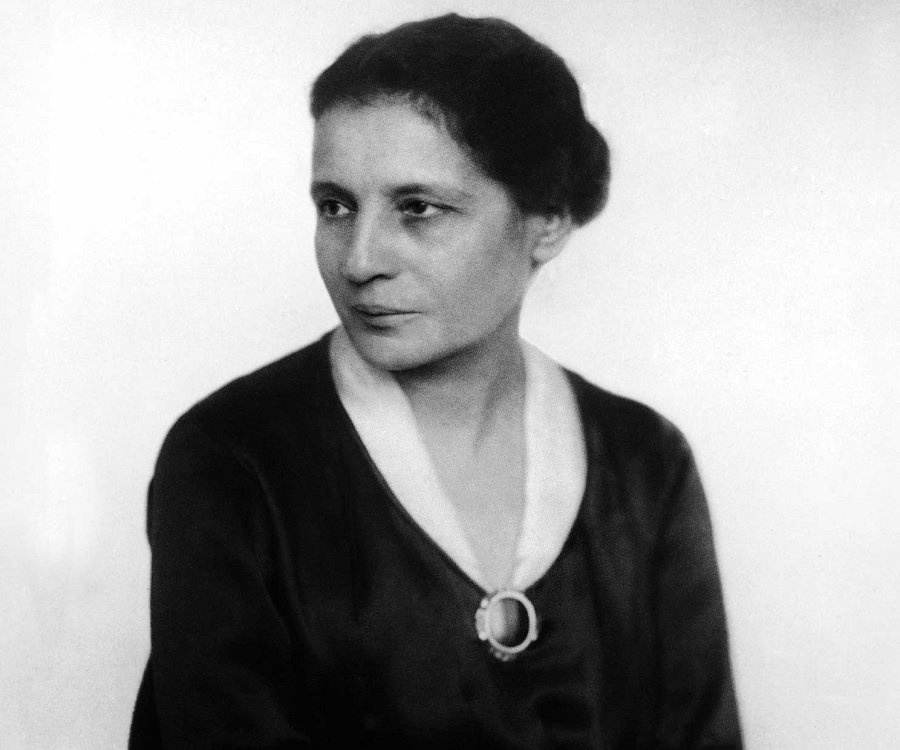
When the Nobel Prize in Chemistry was awarded to Otto Hahn in 1944 for the discovery of nuclear fission ("for his discovery of the fission of heavy nuclei") the Academy overlooked Lise Meitner, who worked with him in the discovery and gave the first theoretical explanation of the fission process. They collaborated for 30 years at the Berlin`s Kaiser Wilhelm Institute for Chemistry, where each of them headed a section, she studied the physics and he the chemistry of racioactive substances. The proof of fission required both the physical insight of Meitner and her nephew physicist Otto Frisch, and the chemical findings of Hahn and Strassmann. In 1966, Hahn, Meitner and Strassmann were awarded the U.S. Fermi Prize
After the German annexation of Austria in 1938, she had to emigrate and went to Stockholm, where she continued working. She later retired to Cambridge, England, where she died in 1968. In 1997 was announced that element 109 would be named meitnerium (Mt) in her honor. Many consider her the most significant woman scientist of the XXth century.
Subscribe to:
Posts (Atom)